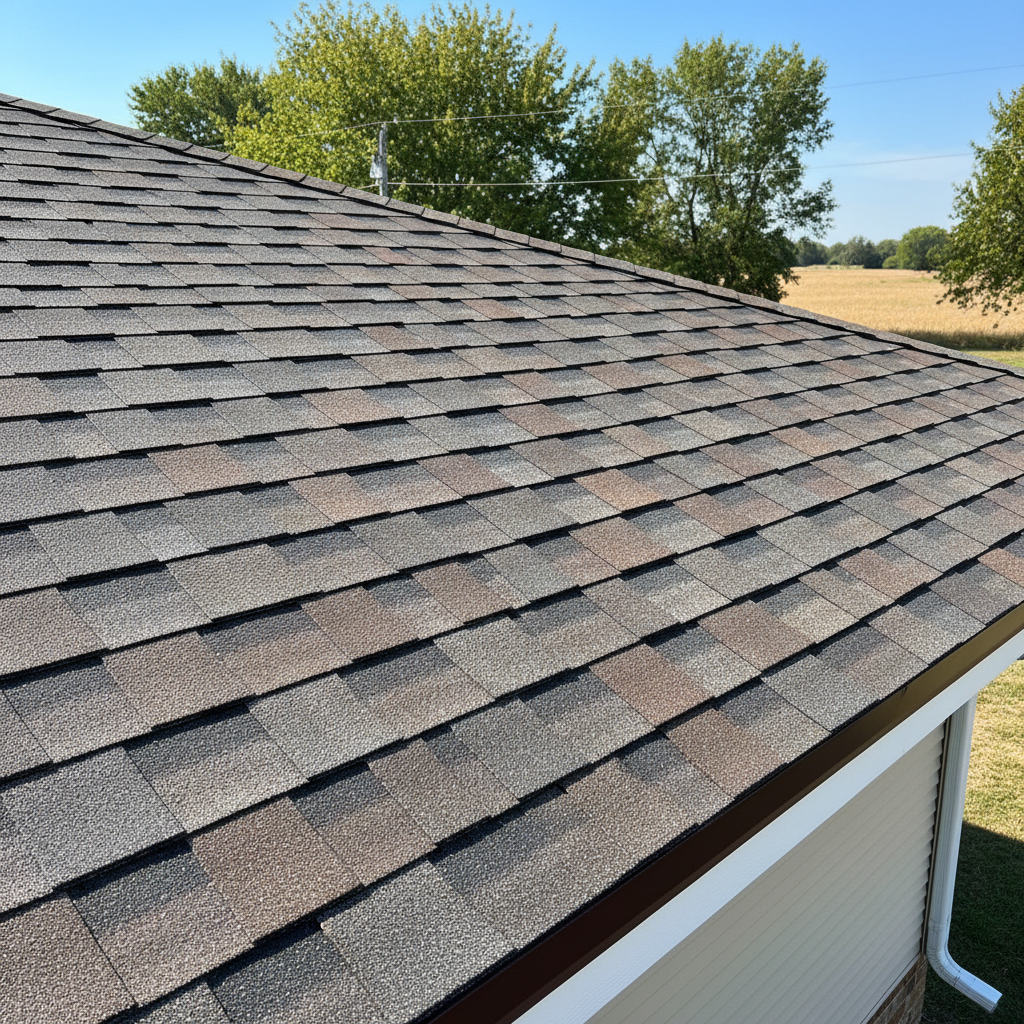
What's the real lifespan of an asphalt shingle roof around here?
You see a lot of numbers thrown around, right? 20 years, 30 years, even 50 years for some of the fancier architectural shingles. But honestly, in Emporia, with our Kansas weather, it's a bit more nuanced. I usually tell folks to expect a good 15-25 years out of a standard 3-tab shingle, and 20-30 years for a quality architectural shingle. That's assuming it was installed right the first time and you've kept up with basic maintenance. We get some pretty brutal sun in the summer, and those strong winds can really beat up a roof over time. Hail, of course, is a whole different ballgame and can cut that lifespan short in a hurry.
How do I know if my shingles are just old or actually damaged?
This is a common one. Old shingles just look worn out. They might be faded, a bit brittle, and you'll see some granule loss – those little gritty bits that protect the shingle. You might find them in your gutters or around your downspouts. That's normal wear and tear. Damaged shingles, though, are different. You'll see cracks, splits, missing tabs, or shingles that are curled up or cupped. If a shingle is curled, it's often because the UV rays have baked it and the asphalt is drying out. If it's cupped, where the edges are higher than the middle, that's usually a sign of moisture issues or poor ventilation. And then there's hail damage – that looks like little pockmarks or bruises on the shingle surface. Sometimes it's subtle, so it's always best to have a pro take a look if you're not sure.
Can I just repair a few damaged shingles, or do I need a whole new roof?
Good question, and it really depends on the extent of the damage and the age of your roof. If you've only got a few missing or damaged shingles from a recent wind storm, and the rest of your roof is in good shape, then yeah, a repair is usually the way to go. We can often match the existing shingles pretty well, or at least get close enough that it's not an eyesore. But if your roof is already 20+ years old, showing widespread granule loss, and you're seeing damage in multiple areas, then replacing a few shingles is just putting a band-aid on a bigger problem. The new shingles won't blend well, and you'll likely be calling me back in a year for more repairs. At that point, it's usually more cost-effective in the long run to consider a full replacement.
What's the deal with roof ventilation? Does it really matter?
Oh, it absolutely matters, especially here in Kansas. Good ventilation is critical for two big reasons. First, it helps keep your attic cooler in the summer. A hot attic can bake your shingles from underneath, shortening their life. It also drives up your AC bills. Second, in the winter, proper ventilation helps prevent moisture buildup. Without it, warm, moist air from your house can get trapped in the attic, condense, and lead to mold, mildew, and even rot in your roof decking. We see a lot of older homes around Emporia, especially in the older neighborhoods like the ones near the university, that just don't have adequate ventilation. It's a relatively inexpensive fix that can add years to your roof and save you money on energy.
How often should I have my roof inspected?
I recommend getting your roof inspected at least once a year, preferably in the spring or fall. And definitely after any major storm with high winds or hail. It's like getting the oil changed in your car – preventative maintenance catches small issues before they become big, expensive problems. A quick inspection can spot loose shingles, clogged gutters, or early signs of wear that you might miss from the ground. We're talking about your home's main defense against the elements, so a little proactive care goes a long way. It's what we do for our customers at Emporia Roofing Company.
Are there different types of asphalt shingles? Which one is best?
Yep, there are a few main types. You've got your 3-tab shingles, which are the most basic and economical. They're flat, look like three separate tabs, and are a good choice if budget is your main concern. Then there are architectural or laminate shingles. These are thicker, have a more dimensional look, and often come with better warranties and wind resistance. They're what most folks are choosing these days. There are also designer or luxury shingles, which are even thicker and mimic the look of slate or wood shakes, but they come with a higher price tag. As for which is best, it really depends on your budget, the look you want, and how long you plan to stay in your home. For most homeowners, a good quality architectural shingle hits the sweet spot for durability, aesthetics, and cost.
What about moss or algae on my roof? Is that a problem?
You definitely don't want moss or algae hanging out on your roof. Algae usually looks like dark streaks or stains, and while it's mostly an aesthetic issue, it can hold moisture and eventually degrade your shingles. Moss is worse. It's thicker, holds a lot of moisture against the shingle surface, and its roots can actually lift and damage the shingle granules. If you've got a lot of shade from trees, especially on the north side of your house, you're more prone to it. You can clean it off, but you have to be careful not to damage the shingles in the process. Sometimes, installing zinc or copper strips along the ridge can help prevent its growth by washing down with rain. It's something to keep an eye on, especially if your house is tucked away under a lot of mature trees.
Why do shingles sometimes blow off in a storm when my neighbor's don't?
That's a frustrating one, isn't it? There are a few reasons this happens. First, installation quality is huge. If the shingles weren't nailed properly – too few nails, nails in the wrong spot, or not driven flush – they're much more likely to lift and blow off. Second, the age of the roof plays a big role. Older shingles are more brittle, and their adhesive strips (the sealant that helps them stick down) can fail over time. A newer roof with fresh, properly sealed shingles is going to hold up better. Third, the type of shingle matters. Architectural shingles generally have better wind resistance ratings than 3-tabs. And finally, sometimes it's just the luck of the draw with how the wind hits your specific roofline or a particular section of your roof. It's not always a sign of a bad roof, but it's definitely a sign you need a professional to assess the damage and make sure everything else is secure.